
Compliance
LOLER inspections and PUWER examinations
A LOLER inspection is a legally required thorough examination of lifting equipment such as forklifts, reach trucks and access platforms. BJB Lift Trucks carries out LOLER inspections and PUWER examinations on all makes of machine across Grimsby, Immingham and Lincolnshire, using our own engineers.
The Lifting Operations and Lifting Equipment Regulations 1998 require the lifting parts of every lift truck to be thoroughly examined by a competent person: at least every twelve months for a truck that lifts loads, at least every six months for one that lifts people or for its lifting accessories, and after anything that could affect its safety. A written report follows each examination and must be kept.
A thorough examination is not a service. It is a statutory inspection, independent of maintenance, and a truck needs both. We do the two together where it suits you, so nothing falls between them, and we work under the Provision and Use of Work Equipment Regulations (PUWER) for the rest of the truck at the same time.
You get a clear written report for each machine and straightforward advice on anything that needs attention. We can book your examinations alongside routine servicing so your trucks spend as little time off the road as possible. To book a visit call 01472 230244 or email enquiries@bjblifttrucks.co.uk. We are open Monday to Friday from 8am to 5pm.
To book an examination
- How many trucks, and the make and model of each
- Whether any lift people or use a working platform
- When the last examination was, if you have the report
- Site postcode and when the trucks can be made available
What we cover
- Thorough examinations
- Mast, carriage, forks, chains, anchors, hydraulics and attachments, examined and reported to the LOLER schedule.
- Six-monthly examinations
- For order pickers, trucks used with working platforms, and lifting accessories.
- Written reports
- The report the regulations require, issued after every examination, with defects and the date the next one is due.
- Defect notification
- Anything that makes the truck unsafe to use is reported to you at once, in writing, so it can be taken out of service.
- PUWER inspections
- The brakes, steering, tyres, wheels, lights, horn and seat belt inspected against the work equipment regulations on the same visit.
- Examination schemes and diary
- A written scheme where intervals need to differ, and a reminder before each date so nothing lapses.
LOLER in detail
What the examination involves
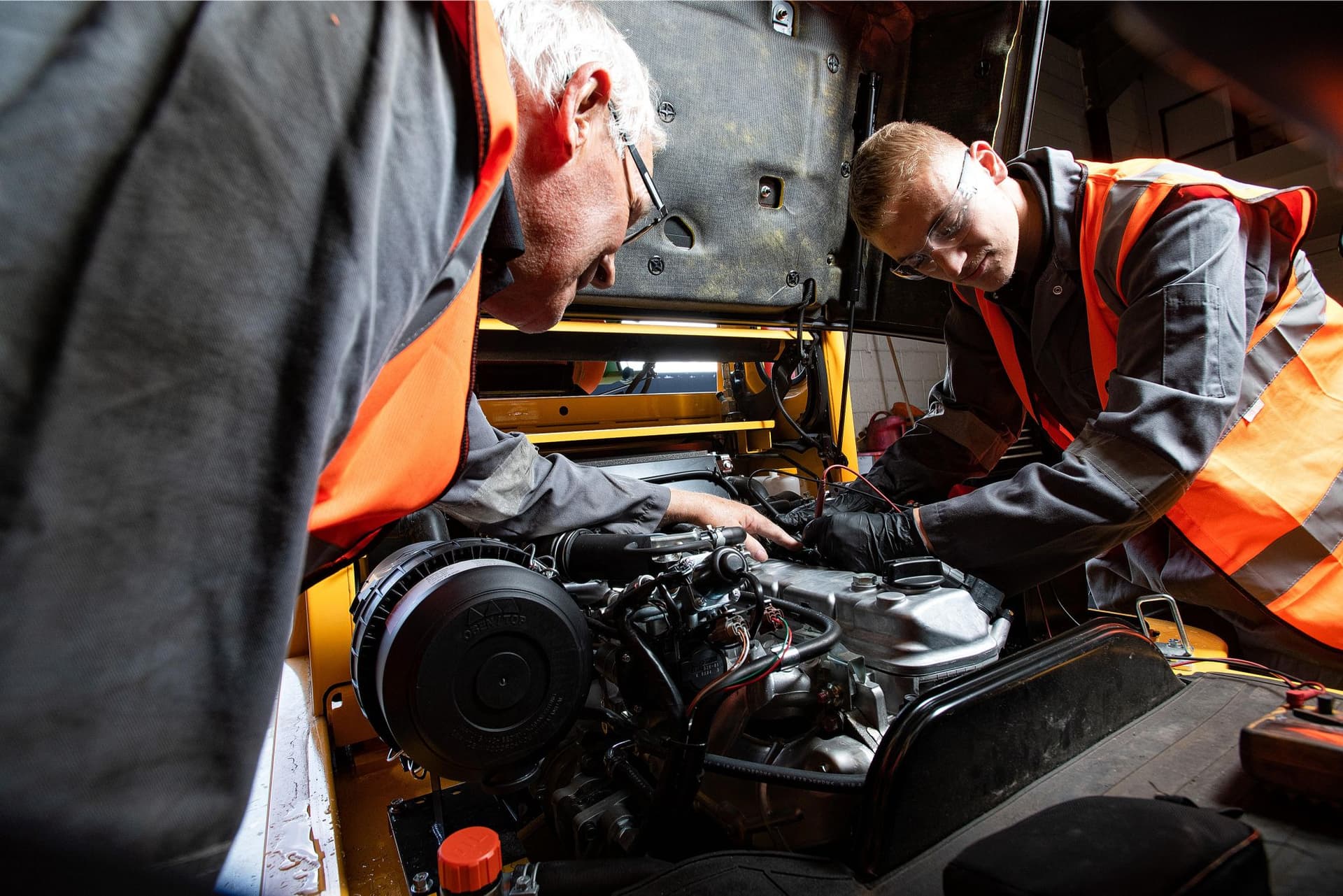
A LOLER inspection is the everyday name for what the regulations call a thorough examination: a detailed check of the parts of a machine that do the lifting, to spot wear, damage or defects before they lead to a failure or an accident.
How often do I need one?
- at least every 12 months for equipment that lifts loads only, such as a standard forklift truck
- at least every 6 months for equipment used to lift people (such as MEWPs) and for lifting accessories
- in line with an examination scheme drawn up by a competent person, as an alternative to the fixed intervals
- after anything that could affect its safety, such as an accident, a major repair or a big change in how it is used
- before it is first used, unless it is new and supplied with a declaration of conformity
LOLER and PUWER: what is the difference?
What does a LOLER inspection cover?
- the mast, carriage, lift chains, chain anchors and pulleys
- the forks, fork locking pins and fork heels, checked for wear and cracks
- hydraulic cylinders, hoses, fittings and load-holding valves
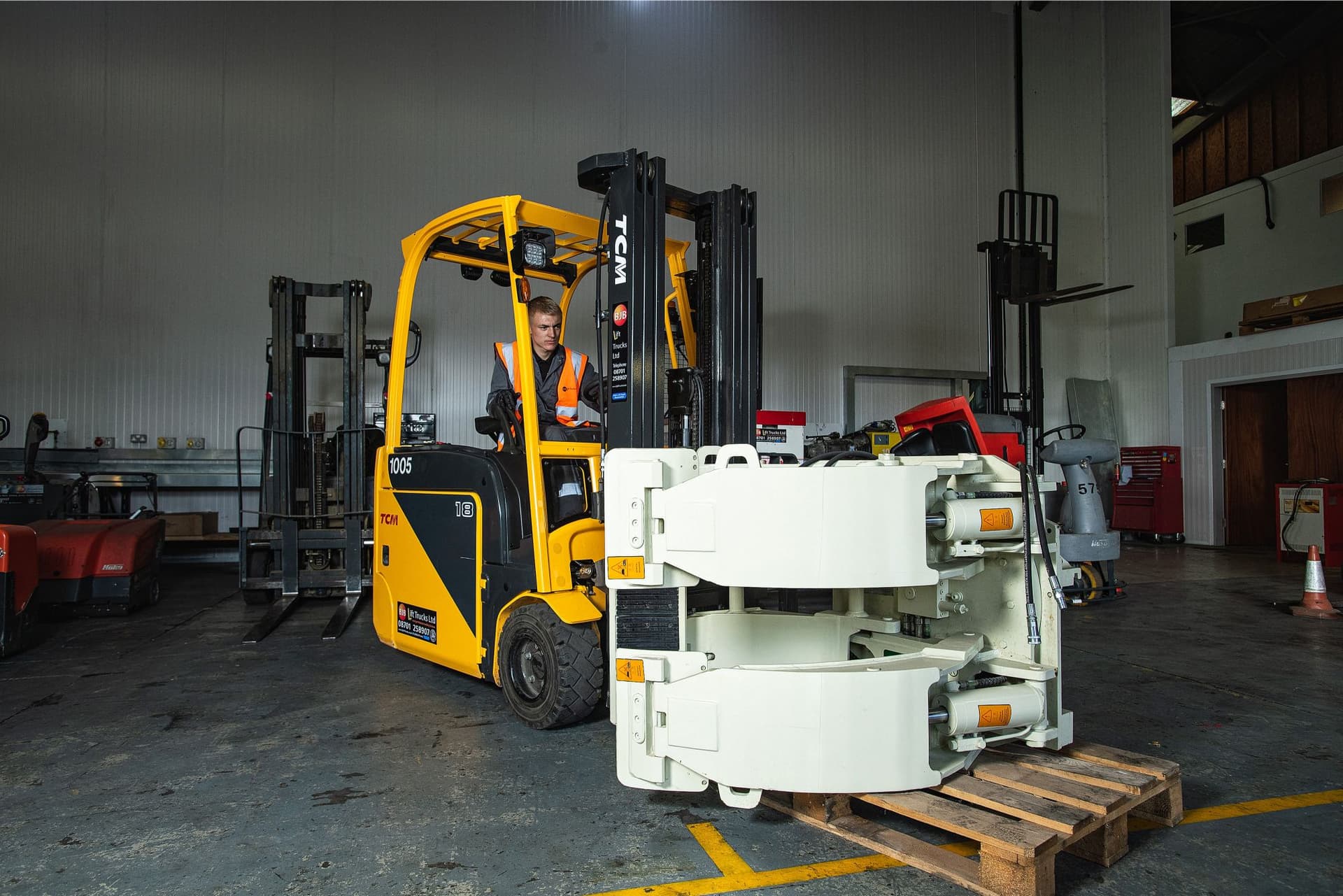
- lifting attachments such as side-shifts, rotators and clamps
- the capacity plate and data plates
- the brakes, steering, tyres and wheels
- the seat belt, overhead guard, lights, horn and warning devices
- a working test of lifting, lowering and tilting
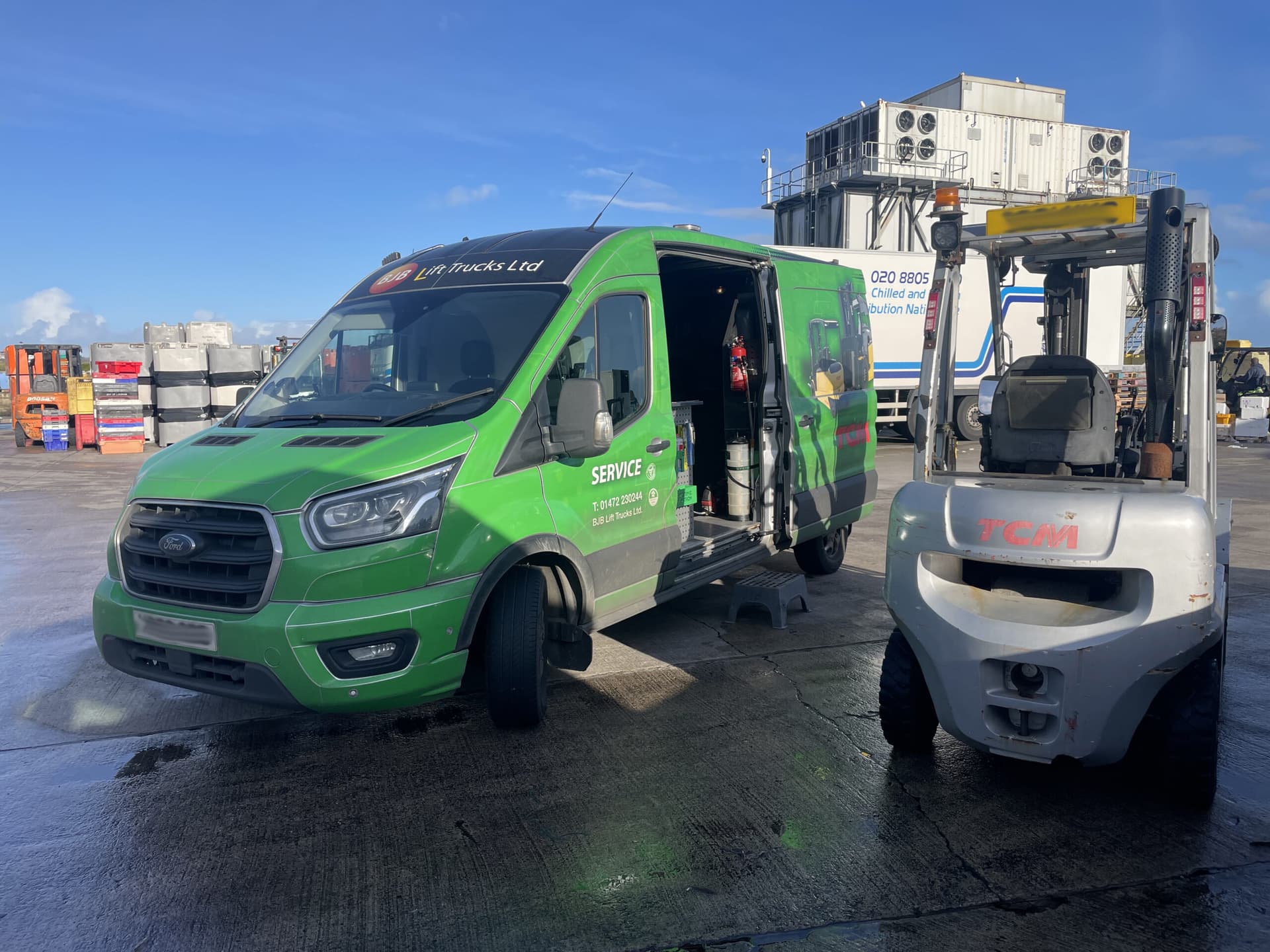
What happens after the examination?
Which equipment do you examine?
- counterbalance forklifts, whether electric, diesel or LPG
- reach trucks, stackers and powered pallet trucks
- very narrow aisle (VNA) trucks
- side-loaders and multi-directional trucks
- telehandlers
- scissor lifts, cherry pickers and other MEWPs
- lifting attachments and accessories
We examine all makes and models, not only the brands we sell.
Why choose BJB Lift Trucks?
- Local and established: we have traded from Grimsby since 1982 and support businesses across Lincolnshire and the Humber.
- Our own engineers: the same team handles your servicing, repairs and thorough examinations.
- All makes covered: we examine and repair machines from every major manufacturer.
- Less downtime: we can combine your LOLER inspection with planned servicing in a single visit.
- Reminders: we send you a reminder when examinations are due so nothing lapses.
- Back-up when you need it: our 24-hour breakdown support is there if a problem develops between visits.
Who needs to arrange a LOLER inspection?
The duty sits with the employer or whoever is in control of the lifting equipment. If you own your trucks, it is your responsibility. If you hire them, check your hire agreement. On long term and contract forklift hire from BJB we can manage the examinations for you, and every hire machine goes out with a current LOLER certificate.
The regulations, in plain English
Questions we get asked
Rest on a question, or tap it, for the answer
A detailed inspection of a lift truck's lifting parts by a competent person, at intervals set by the regulations, to detect defects before they become dangerous. It ends in a written report that the employer must keep. It is separate from routine servicing.
At least every twelve months for a truck that lifts loads only, and at least every six months for a truck that lifts people, such as an order picker or one used with a working platform, and for lifting accessories. A competent person can set different intervals in a written examination scheme.
A competent person: someone with the knowledge and experience of the equipment to detect defects and judge their significance, and independent enough to report them impartially. Our engineers examine all makes and models.
Until the next report is made, and for at least two years. Reports for lifting accessories must be kept for two years. Keep them with the service records; an inspector will ask for both.
No. Lifting equipment must not be used unless it has been thoroughly examined within the required period. Take the truck out of service and book the examination.
No. A service is maintenance under PUWER; the thorough examination is a statutory inspection under LOLER. A truck needs both, and we can do them on the same visit.
Yes. Employers who provide lifting equipment for use at work must make sure it is thoroughly examined at the intervals set by LOLER. They must also keep the examination reports.
Most forklift examinations take around one to two hours per truck, depending on its type and condition.
If the defect is dangerous the truck must stop being used until it is repaired. For other defects the report will set out what needs fixing and the timescale. Our engineers can quote for and carry out the repairs.
Yes. We cover Grimsby, Immingham, Scunthorpe, Hull, Lincoln and the wider Lincolnshire area. Call 01472 230244 to check your location.
Bring the dates into line
Send us the fleet list and the last examination dates. We will schedule the examinations with your servicing and keep the reports where you can find them.