
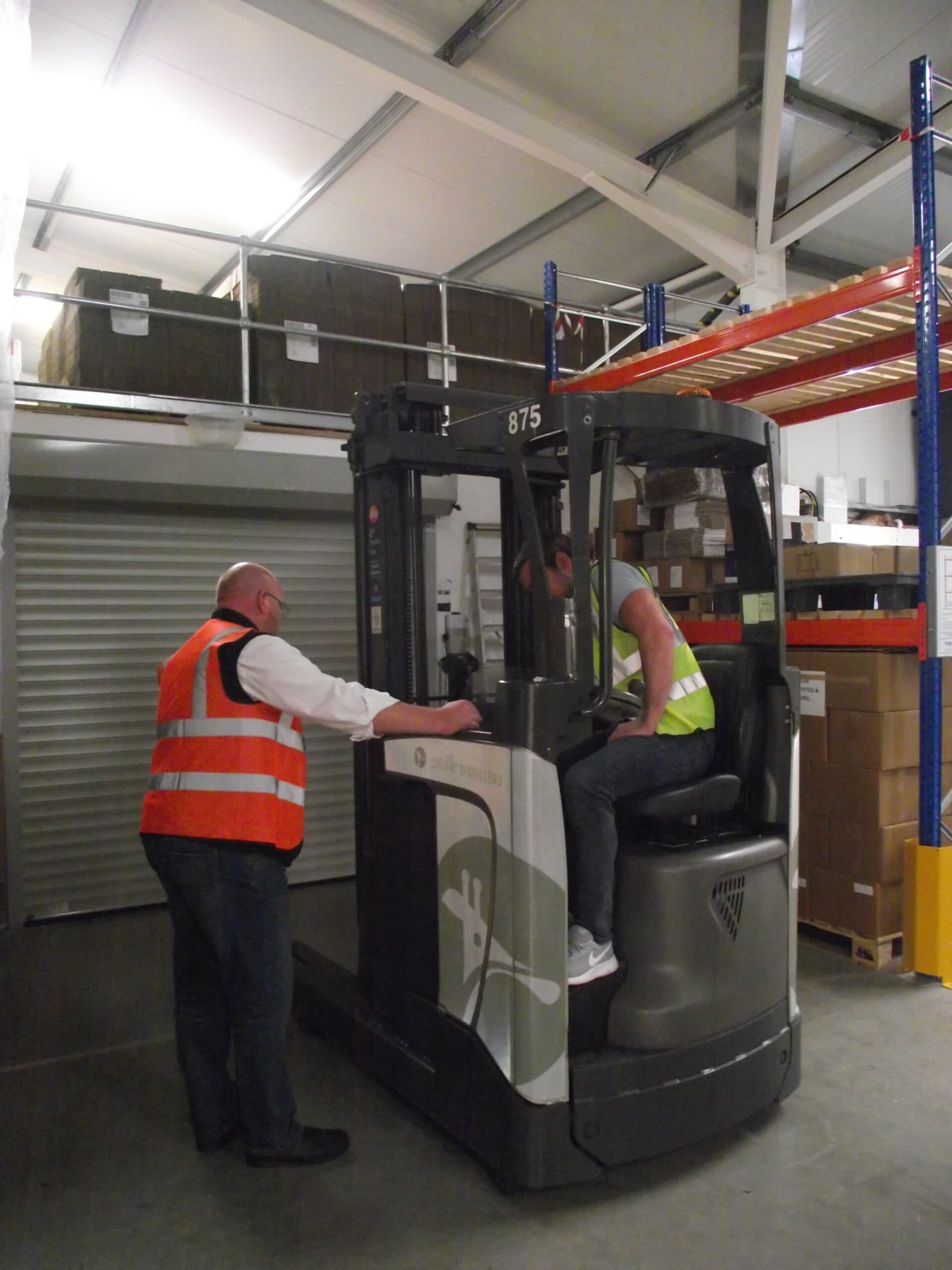
Why forklift training is essential
Operating a counterbalance forklift can look straightforward. It is not. A forklift lifts loads that weigh more than a car, in spaces shared with people, with a centre of gravity that moves every time the mast rises. Without proper training, an operator can put themselves, their colleagues and the building at risk without knowing it.
The Health and Safety Executive expects every operator to have completed basic training on the type of truck they use, and employers to authorise them only once they have. Beyond compliance, the real return is fewer accidents and injuries.
The risks of untrained operation
- Tipping over. Forklifts have a high centre of gravity and tip more readily than other vehicles, especially with an uneven load, a raised mast, or speed in a turn. Training teaches how to lift, load and turn so the truck stays on its wheels.
- Collisions with pedestrians. Warehouses, loading docks and sites are full of people. Large loads block the view and trucks have blind spots. Trained operators keep visibility, follow designated routes and communicate with horn, lights and hand signals.
- Dropped loads and poor stacking. A dropped pallet damages goods and can kill. Training covers securing and stacking loads so they are stable before they move.
- Mechanical misuse and missed checks. A trained operator does a pre-use check every shift and knows what a soft brake, a leaking hose or a stretched chain means, so faults are reported before they cause an accident.
What training gives you
- Accident prevention. Courses teach hazard identification, operating within the truck's limits, safe speeds, seat belt use and load handling.
- Confidence and productivity. An operator who is not guessing works faster and damages less.
- Compliance. A certificate of basic training registered with RTITB is the evidence an inspector or insurer will ask for.
- A safer site for everyone. Trained operators also protect the people walking past them.
Who needs training?
Every operator, at every level of experience. Novices need the full course; experienced operators without a certificate need assessing and certificating; anyone with a certificate needs a refresher, which RTITB recommend every three years; and anyone moving to a different type of truck needs conversion training. Employers who let untrained staff operate trucks carry the liability.